
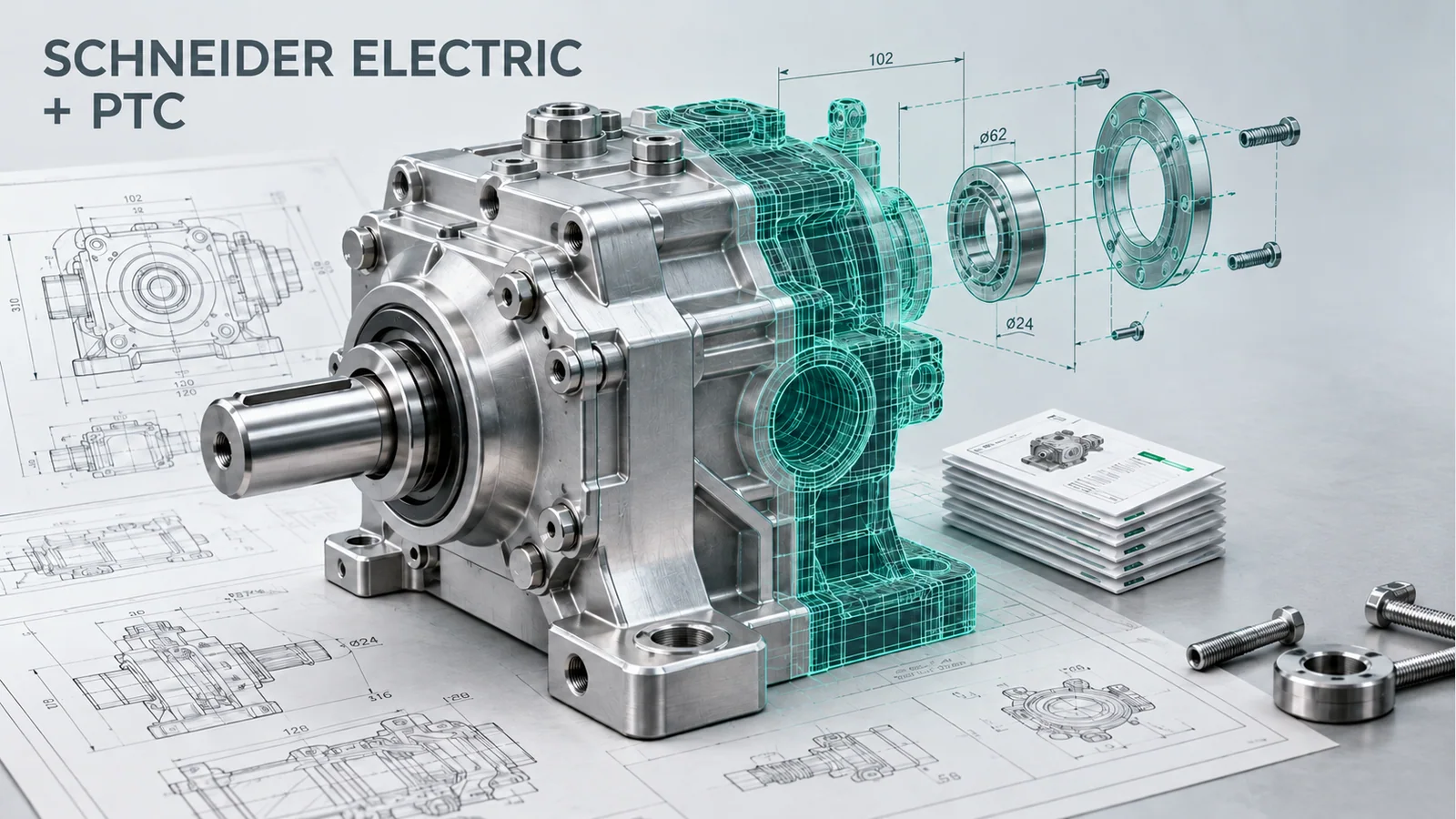
On October 5, 2026, Schneider Electric and PTC announced a definitive agreement for an all-cash acquisition at $205 per share, approximately 42% above PTC's last closing price. The transaction values PTC's equity at approximately $22.6 billion (€20.1 billion) and its enterprise value, including debt, at approximately $23.7 billion (€21.1 billion). Completion is targeted for the third quarter of 2027, subject to shareholder and regulatory approvals. PTC remains a separate company until the transaction closes.
Scope of this analysis Transaction figures are drawn from Schneider Electric's October 5 announcement, PTC's October 4 merger agreement filed with the SEC, and PTC's March 16 announcement of the Kepware and ThingWorx divestiture. Projected savings, revenue synergies, and completion dates are management expectations, not confirmed product capabilities or implementation commitments.
KEPServerEX is outside the proposed acquisition. PTC sold Kepware and ThingWorx to TPG in March 2026, so the Schneider Electric agreement does not transfer ownership of those connectivity products.
Transaction Structure and Financial Terms
PTC's board approved the merger agreement with Schneider Electric and its wholly owned merger subsidiary on October 4. Both boards approved the transaction unanimously, and PTC's board recommends shareholder approval. Upon completion, each PTC share will be converted into the right to receive $205 in cash, and PTC will become a wholly owned Schneider Electric subsidiary. The agreement is not subject to a financing condition. Schneider has secured approximately $25 billion in bridge financing from Morgan Stanley and Société Générale and expects permanent financing to include approximately €5-6 billion in newly issued equity and €16-17 billion in new debt.
Schneider Electric also reported the following transaction metrics:
- A premium of 46.1% to the volume-weighted average share price over the prior 30 trading days and 42.3% to the last closing price.
- A valuation of approximately 21× expected 2027 adjusted EBITA, or approximately 13× including the full anticipated annual synergies. EBITA measures earnings before interest, taxes, and amortization.
- Annual cost savings of €250 million targeted by year three, together with approximately €800 million in anticipated revenue synergies. These projections describe expected commercial and operating benefits, not committed changes to specific products.
- Approximately €2.4 billion in PTC calendar-year 2025 revenue, with an adjusted EBITA margin of approximately 40%, based on the financials used by Schneider. Revenue and annual recurring revenue (ARR) are expected to grow approximately 10% annually through 2029. These figures exclude ThingWorx and Kepware revenue.
Schneider also expects to maintain a category A credit rating, subject to rating-agency assessments, continue increasing its dividend over time, and reduce share buybacks in 2027 and 2028. The Wall Street Journal reported that Schneider's shares declined nearly 10% on the announcement date. That market response should be considered separately from the technical suitability or reliability of its Modicon PLC portfolio.
Schneider brought forward its third-quarter 2026 revenue release to October 16 following the announcement. The revised reporting schedule does not establish a product integration roadmap.
Scope of the Proposed Acquisition
Following the divestiture of its connected-device software businesses, PTC's portfolio focuses on product design and lifecycle management. It includes computer-aided design (CAD), product lifecycle management (PLM), application lifecycle management (ALM), and service lifecycle management (SLM). These tools help manufacturers define products, manage engineering information, and maintain that information throughout service. Creo and Onshape support design, Windchill manages product records, and Codebeamer supports software lifecycle management. These capabilities are distinct from PLCs, drives, and OPC servers, which control equipment or provide access to operational data.
Schneider describes its strategy as a digital thread connecting design, manufacturing, operations, and maintenance. The proposed portfolio brings together several distinct businesses:
- AVEVA: Schneider completed its acquisition in 2023. The portfolio supports industrial operations, process software, and operational data management, including the PI historian used to store time-series equipment data.
- Cognite: A separate proposed acquisition that has not yet closed. Cognite, AVEVA, and PTC should not be specified as a single available system without a validated integration and support model.
- PTC: The proposed addition extends the portfolio into product and machine design, with engineering information that could provide context for future analytics and AI applications.
On a combined basis, including Cognite, Schneider expects software and services to represent approximately 24% of group revenue, with more than 15,000 software employees and more than 50,000 software customers. It also estimates that its addressable industrial-software market would expand approximately threefold, particularly in discrete and hybrid manufacturing. These are portfolio-level expectations; they do not, by themselves, justify changes to an existing controls specification.
Products Outside the Transaction
On March 16, 2026, PTC completed the sale of Kepware and ThingWorx to TPG, reporting $523 million in cash proceeds at closing. Schneider's October financial presentation excludes those businesses because they are no longer part of PTC.
This distinction is particularly important for teams responsible for industrial connectivity:
- KEPServerEX and other Kepware connectivity products connect PLCs and industrial protocols, including Modbus, EtherNet/IP, and OPC, to platforms such as Ignition, historians, and custom gateways. Kepware belongs to TPG, and the proposed PTC acquisition does not transfer that business to Schneider.
- ThingWorx supports applications and interfaces for connected equipment. It was included in the March divestiture. The October agreement does not establish a migration from ThingWorx to AVEVA.
- Modicon, EcoStruxure hardware, and Altivar are already part of Schneider's portfolio. The proposed addition of Windchill does not change the capabilities or communication protocols of Modicon M580, ControlLogix, or Siemens S7 controllers.
Schneider's announcement describes the combined software business as open and interoperable across vendors and hardware. Controls teams should validate that commitment against supported interfaces, licensing requirements, and contractual support terms. In practice, existing OPC UA servers, Kepware installations, and historians should retain a clearly documented integration and support path without an assumed requirement to adopt additional design software.
Considerations for Controls and Engineering Teams
The announcement does not itself require immediate changes to installed controls. Completion remains pending, and the industrial connectivity products discussed above are outside the transaction. Engineering decisions should continue to be based on available products, documented interfaces, and verified support requirements.
- Maintain established PLC and SCADA standards. The proposed acquisition of product design and lifecycle software does not invalidate existing Modicon, Rockwell, or Siemens standards. Change those standards only where there is a demonstrated technical or operational benefit.
- Confirm Kepware ownership and support independently. Do not assume that Kepware will be included in Schneider licensing, bundled with AVEVA, or replaced as a result of this agreement. Direct renewal and support questions to the Kepware business under TPG.
- Evaluate bundled proposals on their technical merits. The projected €800 million in revenue synergies anticipates commercial opportunities across the combined portfolio. When reviewing a proposal, verify support for third-party controllers and design tools, and include any additional integration work in the bid evaluation.
- Define the boundary between engineering and operational data. A Windchill product model is not a PLC tag database, and a Creo assembly is not an I/O schedule. Any handoff of equipment identifiers, device names, or engineering documents should have a defined scope and validation process. It should not be treated as an automatic live connection to the controller.
- Assess AI capabilities against available products. Future applications combining design information and operational data require supported interfaces, reliable data acquisition, and a validated integration architecture. Neither the PTC nor the Cognite transaction has closed; proposed AI capabilities should not be treated as delivered functionality.
- Review licensing and support provisions. For active Windchill, Creo, or AVEVA negotiations, confirm how completion or termination of the merger would affect pricing, maintenance, and support commitments. The merger agreement identifies potential execution risks, including management distraction, hiring delays, and customer uncertainty.
Key Takeaways
- Kepware and ThingWorx are outside the proposed transaction.
- Potential common ownership of AVEVA and PTC does not establish a single integrated, orderable product.
- Market reactions to the announcement should be considered separately from equipment selection and engineering standards.
- Q3 2027 is a target completion date, subject to shareholder and regulatory conditions. Current specifications should rely on products and capabilities available today.
The proposed transaction reflects broader consolidation around engineering and operational data, discussed in our industrial software investment analysis. For controls projects, the priorities remain controller selection, network architecture, data management, and long-term support. Our PLC redundancy comparison and OPC UA Field eXchange overview address those technical decisions independently of changes in software ownership.
Orgenis can review proposed software integrations, assess their implications for existing controls, and define the engineering scope needed to support them.